

Human body : ค้นหาหนังสือธรรมะ หน้า 5 / 11
หน้าหนังสือทั้งหมด
9
Quality of Mind: Mankind's Most Precious Resource
QUALITY OF MIND: MANKIND'S MOST PRECIOUS RESOURCE
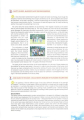
Our lives have been transformed through the triumphs of modern technology. Even though the progress of science and technology has brought convenience
In today's fast-paced world shaped by modern technology, the quality of mind has become increasingly vital. The rapid advancement of science has made happiness hard to achieve, with rising social issu
25
The Impact of Selfishness and Bias on Society
Selfishness leads to suffering when each person thinks mainly about his or her own benefit rather than giving support, encouragement and material things to others. When problems occur in the family, g
Selfishness and bias lead to suffering when individuals prioritize self-interest over communal support. In families and communities facing problems, this behavior results in conflict. Bias manifests i
208
The Proclamation of Deities in Buddhist Cosmology
…t arahantship. The explanation is that Koṇdaṇā’s vision and knowledge extended only to the Physical Human body. He had not yet seen the same in the more subtle inner bodies. He would have to follow the Eightfol…
…realization yet only attains 'Stream-Entry' at this stage. His insights are limited to the Physical Human body, indicating a need for further advancement on the Eightfold Path. Upon progressing through the subt…
220
Exploring the Path to Enlightenment in Buddhism
…07, 122, 134 Coarse Form-Brahma Body 107, 122, 134 Coarse Formless-Brahma Body 107, 122, 134 Coarse Human Body (see Physical Human Body) cognition, sphere of 125 collective arising of Path Factors 133 combat wo…
This text delves into various aspects of Buddhism, focusing on the mechanisms of enlightenment through chanting and the Dhammacakkapavattana Sutta. The practices necessary for attaining enlightenment
101
Untitled
…imes.
(4) The Problems Caused by One’s Defilements: First of all, it is important to know that the human body comprises mainly of body and mind.
The body is made up of the four primary elements which include …
No summary can be provided without content.

121
องค์ประกอบของบุคคลตามหลักพระพุทธศาสนา
because in the Buddhist analysis of personal
experience, a human being is composed of five
aggregates : form, sensation, perceptions, mental
formations, and consciousness.
From this analysis the self
because in the Buddhist analysis of personal experience, a human being is composed of five aggregates : form, sensation, perceptions, mental formations, and consciousness. From this analysis the self
27
Creating a Heavenly Family through Dhammakaya
alcohol, gambling and adultery. If we resolve to live
virtuously, even to experiment with it for a period as
short as one month, we will see an immediate surge in
happiness within our family.
We refer
In pursuit of a happier family life, individuals are encouraged to resolve against alcohol, gambling, and adultery. By practicing meditation, families can reach the 'Dhammakaya' state, which symbolize
42
Understanding the Mind: Characteristics and Defilements
…re? There are thirteen general characteristics: (1) The mind does not have a physical form like our human body, but is a more subtle and refined form of a bright sphere, (2) It can think only one thought at a t…
This text explores the essential characteristics of the mind and how they influence our perceptions, thoughts, and overall mental state. The mind, unlike the physical body, is a subtle entity that can
50
Golden Age of Inner Peace
Golden Age of Inner Peace.
release the worry and sorrow inside you at the same
time. Take your time to let go of all your thoughts
and then return to regular breathing.
Gradually relax every part of y
This text guides readers on achieving inner peace by letting go of worries and sorrow. It emphasizes the importance of relaxation, visualizing a sphere of light, and freeing the mind of tension. The p
129
Exploring the Center of the Body in Meditation
Thus, the phrase 『息中具有四大。心在中』 can be interpreted as: "the mind should be located at the centre of the body while breathing (in and out)." The precise position of the centre of the body where the mind
This text examines the phrase 'the mind should be located at the center of the body while breathing in and out.' It references the teachings of PhraMongkolthepmuni regarding the center's location abov
15
Taming the Mind to Raise its Quality
TAMING THE MIND TO RAISE ITS QUALITY
Meditation is a legacy passed down from the wisdom of the ancients. The ancients recognized the need to preserve the quality of the mind and placed more importanc
Meditation is an ancient practice aimed at preserving the mind's quality over material wealth. The ancients knew that true prosperity lies in inward focus, connecting with the center of our being. By
88
Step by Step Instructions for Meditation Technique
Step by Step Instructions for the Meditation Technique
1. The sitting posture, which has been found to be the most conducive for meditation, is the half-lotus position. Sit upright with your back and
This guide provides detailed step-by-step instructions for a meditation technique, focusing on the half-lotus sitting posture for comfort and alignment. It emphasizes the importance of relaxation thro
122
Meditation Techniques for Inner Peace
4. Feel that your body is an empty space, without organs, muscles or tissues.
Gently and contentedly rest your attention at a point near the seventh base
of the mind at the center of the body. Whateve
This text provides guidance on meditation practices that help practitioners focus their minds and achieve deeper states of inner peace. The method involves visualizing a crystal ball at the center of
139
Understanding the Body of Enlightenment in Buddhism
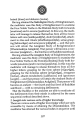
hatred [dosa] and delusion [moha].
Having attained the Sakidägämi Body of Enlightenment,
the meditator uses this Body of Enlightenment to examine
the Four Noble Truths in the Brahmä Body both forwards
บทความนี้สำรวจระดับต่างๆ ของการตรัสรู้ในพุทธศาสนา โดยเน้นถึงการใช้ร่างกายของการตรัสรู้ เช่น Sakidägämi, Anägämi และ Arahant ซึ่งผู้ปฏิบัติธรรมจะสามารถปล่อยวางข้อผูกพันต่างๆ เพื่อเข้าถึงความรู้สูงและกา

50
วิธีการฝึกสมาธิ
HOW TO
MEDITATE
We should first explain the principles of
meditation as a whole. Some will think of
meditation as a miserable practice, as a kind of
spiritual lesson or some kind of religious act or
a
HOW TO MEDITATE We should first explain the principles of meditation as a whole. Some will think of meditation as a miserable practice, as a kind of spiritual lesson or some kind of religious act or a

65
ธรรมกายและการเข้าถึง
…...It's immortal because it's the body of Dhamma, it's not composed of the Five
Aggregates like the human body....
(...กายนี้เป็นอมตะ เพราะว่าเป็นธรรมะ มิได้ประกอบด้วย เบญจขันธ์ ดังเช่นกายมนุษย์...)
... Dhammak…
KANLAYANA NAMIT LETTERS FROM LITTERS FROM KANLAYANAMT OM KANLAYANAMIT LETTERS FROM KANLAY IT LETTERS FROM KANLAYANAMIT LETTERS FROM FROM_KANL// KANLAYANAN/ LETTERS F/ M KANLAYAN TTERS FROM ANAMIT LET/
40
Meetings with a Dhamma Master: Insights from Luang Por
Meetings with a Dhamma Master
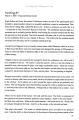
Meeting #5
March 5, 2009 – Panawat Retreat Center
Right before the Peace Revolution Conference ended, several of the participants and I decided to attend another retrea
In this reflective account, the author shares insights from a meeting with Luang Por at Panawat Retreat Center, discussing the duality of body and mind. The narrative takes place in a picturesque medi
140
Understanding the Dhammakāya and Its Mind
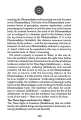
…s of perception, sensory registration, central processing and cognition in just the same way as the human body. By contrast however, the mind of the Dhammakāya can be enlarged to a diameter equal to the distanc…
The Dhammakāya embodies a body that resembles human perception while its mind can expand significantly, allowing the meditator to observe the eight inner bodies. This process unveils the Three Signs o
232
Exploration of Metaphors in Buddhist Philosophy
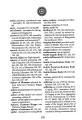
… Body
120; of perception 125; of Seeing and 107, 122, 134
Knowing Liberation·106, 107, 120; Subtle, Human Body 106, 107, 122,
of Self-Discipline 105, 106, 107, 120; 134
of sensory registration 125; of Wise- suc…
This text explores several metaphors used in Buddhist philosophy, including the snake as a metaphor for craving and its relationship to the concept of suffering. It further elaborates on the significa
9
The Lotus Flower: A Symbol of Purity and Knowledge
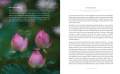
THE LOTUS FLOWER
Held in high regard and respect for millennia by many differing cultures and segments of seeking humanity, the lotus flower is a symbol of purity and illumination rising from the mudd
The lotus flower has been a revered symbol across cultures for its representation of purity and illumination, emerging from the muddy depths of human suffering. The text emphasizes the ongoing human q